October 1, 2026 · 8 min read
The Era of Owning Nothing
We can access almost everything. So why do we have so little to pass on?

I bought a physical book recently.
Not an ebook. Not an audiobook. A real paperback that I could hold, put on my shelf and eventually give to someone else.
Or at least, that is what I thought.
On the copyright page, I found this:
“This book is licensed for your personal enjoyment only.”
It went on to say that the book could not be resold or given away and that if someone else wanted to read it, they should purchase another copy.
I stared at it.
I bought the book. It was physically in my hands. And somehow, I was still being told what I could do with it.
The legal reality is more complicated than a sentence printed inside a book. In the United States, for example, the first-sale doctrine generally allows the owner of a lawfully acquired physical copy to sell or otherwise dispose of that particular copy. This principle is part of what makes used bookstores and library lending possible.
But the notice made me think about something much bigger.
When did paying for something stop meaning it was ours?

We traded ownership for access
Think about how we consumed things twenty or thirty years ago.
You bought an album. You had the CD.
You bought a movie. You had the DVD.
You bought a video game. You had the cartridge or disc.
You bought software. You installed it on your computer.
Today, we have access to more entertainment, information and technology than previous generations could have imagined.
Spotify gives us millions of songs without needing shelves of CDs. Netflix gives us thousands of movies without a DVD collection. Cloud services protect files without stacks of hard drives.
That convenience has real value.
But access and ownership are not the same thing.
Your Spotify library is not a record collection.
Your Netflix history is not a shelf of movies.
A subscription gives you access for as long as you keep paying and for as long as the company continues offering that content under those terms.
We gained access to almost everything, but stopped accumulating many of the things we were paying for.
The $9.99 problem
Most subscriptions do not feel expensive.
That is part of what makes them so easy to collect.
$9.99 for this. $6.99 for that. A few dollars for storage. Another streaming service. A fitness app. Software. Gaming. News. Premium memberships.
Your bank account does not experience those purchases individually. It experiences all of them together.
In Deloitte’s 2025 Digital Media Trends survey, subscribing U.S. households reported paying for an average of four streaming-video services and spending about US$69 per month on them. Almost half of consumers surveyed said they were paying too much for streaming.
US$69 per month is US$828 per year.
Over ten years, without accounting for price increases, that is US$8,280.
And that is only streaming video.
One of the simplest ways to understand the real cost of a subscription is to stop looking at its monthly price.
Multiply it by 12.
Then multiply it by 10.
A subscription can still be completely worth it. But $12.99 feels different when you realize you’re making a decision worth more than $1,500 over a decade.
Subscriptions benefit when we stop thinking about them
There is another important difference between buying something and subscribing to it.
A traditional purchase forces you to make a decision.
Do I want this enough to spend money on it today?
A subscription asks that question once.
After that, the payment simply happens.
A 2025 study published in the American Economic Review examined subscription payments using data from a large payment-card network. Researchers found that cancellations increased when consumers had to replace their payment cards and were forced to actively reconsider subscriptions. Their models estimated that consumer inattention and cancellation friction nearly doubled seller revenues, holding initial subscribers fixed.
In other words, forgetting can be profitable.
Inaction becomes a transaction.
That does not make subscriptions inherently bad. It simply means recurring expenses deserve recurring consideration.
When did cooking at home become a budgeting strategy?
The shift toward paying for convenience goes beyond subscriptions.
Food is one striking example.
In 1960, food purchased away from home represented 26.3% of total U.S. food expenditures. By 2023, it represented 58.5%, the highest share since the USDA’s series began in the 1930s.
That does not mean Americans eat 58.5% of their meals outside the home. Restaurant food generally costs more, so spending share and the amount of food consumed are not the same thing.
Still, the long-term shift is significant.
It makes me think about something we casually say now:
“I’m trying to save money, so I’m cooking at home.”
Cooking at home has somehow become a budgeting strategy.
But cooking dinner at home was not always a financial hack.
It was dinner.
Convenience has value. Paying for it can save time, reduce stress and make life genuinely easier.
But it is worth noticing how many ordinary inconveniences have gradually become things we can pay to remove.
We used to share more than passwords
Ownership also made sharing incredibly simple.
You finished a book and gave it to your sister.
You lent someone a DVD.
Your friend borrowed your video game.
Someone gave you their old records.
One purchase could provide value to several people over many years.
Digital services work differently.
Netflix, for example, now defines a Netflix Household around devices associated with the main place where the service is watched. People outside that household generally need their own account or, on eligible plans, can be added as extra members.
Netflix has every right to determine how access to its service works.
That is exactly the point.
Nobody had to ask a movie studio for permission to lend their cousin a DVD.
You owned the DVD.
And maybe there is something else we lost when everything became individually accessible.
If the only thing I want to watch on a streaming service is one show that comes back once a year, do I need twelve months of access?
Maybe I subscribe for one month.
Maybe I go to a friend’s house.
Maybe we make dinner, watch the whole thing together and turn it into an event.
There is something almost old-fashioned about that now.
Statistics Canada found that 47.9% of Canadians saw friends on an average day in 1986. By 2022, that number had fallen to 19.3%. The percentage of Canadians who felt they did not spend enough time with family and friends also increased over the period measured.
Streaming did not cause that decline. There are decades of social, technological and economic changes between those numbers.
But it raises an interesting question.
Have we made entertainment easier to access individually while making fewer experiences naturally communal?
What do we have left to pass on?
This may be the part of the ownership shift that bothers me most.
A physical object can outlive its buyer.
My daughter could eventually take one of my books from a shelf and know that I read it.
Someone can inherit their father’s record collection.
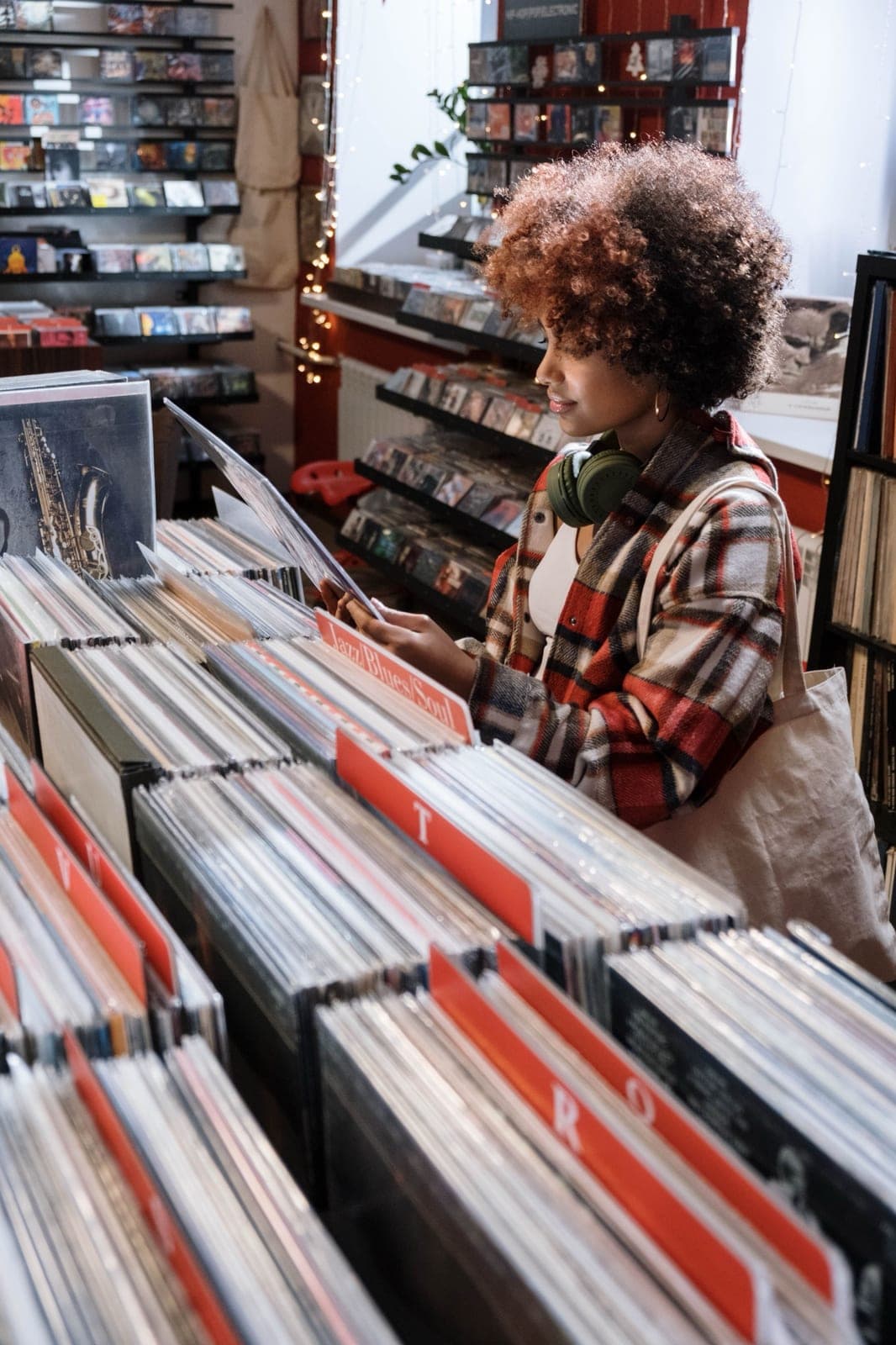
A grandmother’s cookbook, filled with notes in the margins, can survive for generations.
We pass down photographs, watches, furniture, jewelry, art, instruments, books and collections.
Sometimes those things are financially valuable.
Sometimes they are worth almost nothing.
But they still carry something.
History.
Taste.
Memory.
Evidence that someone was here.
Now think about the enormous personal libraries we are creating digitally.
Our playlists.
Our movies.
Our ebooks.
Our subscriptions.
We can spend thousands of dollars consuming culture over a lifetime without necessarily building a collection that can be handed to the next person.
Apple’s Legacy Contact system makes this distinction particularly clear. Apple allows someone you designate to access certain account data after your death, including photos, messages, notes and files. But Apple says a Legacy Contact cannot access movies, music, books or subscriptions purchased through the deceased person’s Apple Account.
A physical purchase, a digital purchase and a subscription may feel similar while we are using them.
They become very different when we ask:
Can I keep it? Can I lend it? Can I sell it? Can I give it away? Can someone inherit it?
We have created enormous personal libraries of culture that often are not actually property.
So should we cancel every subscription?
No.
Some subscriptions are fantastic value.
If you use Spotify every day, buying every song individually would probably make very little sense.
If a fitness membership gets you exercising consistently, that subscription may be worth far more than its price.
If cloud storage protects years of family photos, cancelling it to save a few dollars could be a terrible trade.
The question is not whether subscriptions are bad.
The question is whether each subscription deserves permanent access to your income.
Go through your recurring expenses and ask:
- What does this cost me per year?
- How often do I actually use it?
- Would I subscribe to it again today?
- Could I subscribe only during the months when I need it?
- Is there something I could buy once instead?
- What am I actually getting in return?
And sometimes the answer will simply be:
Yes. I love this. Keep charging me.
Perfect.
Financial responsibility does not require making your life miserable.
It requires knowing where your money is going and deciding whether you still agree with it.
Owning more does not mean buying more
This is not an argument for filling your house with stuff.
Sometimes access is better.
Sometimes ownership is better.
Sometimes the smartest financial decision is buying nothing at all.
The point is knowing which one you are choosing.
Technology has given us access to almost anything instantly. That is extraordinary.
But ownership gives us something access cannot always provide.
The ability to keep something.
To lend it.
To sell it.
To give it away.
And sometimes, to pass it down.
So no, I am not cancelling every subscription and rebuilding a wall of DVDs in my living room.
I am simply paying more attention.
Rent what deserves renting. Subscribe to what earns its subscription. Own what is worth owning.
And know what your money is building.
Because eventually, what remains is what becomes someone else’s inheritance.
Sources
- 17 U.S.C. § 109, the first-sale doctrine (Cornell Legal Information Institute)
- Deloitte, 2025 Digital Media Trends
- Einav, Klopack & Mahoney, “Selling Subscriptions,” American Economic Review 115(5), 2025
- USDA Economic Research Service, “Food-away-from-home spending share peaked in 2023”
- Netflix Help Center, “What is a Netflix Household?”
- Statistics Canada, Canadians who saw friends on an average day, 1986 to 2022
- Apple Support, “How to add a Legacy Contact for your Apple Account”